Friday, 19 November 2010

The Committee scrutinizing Margo MacDonald's Bill have recommended that it be rejected – now it is time for MSPs finally to bury it

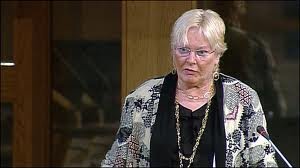
I have previously blogged about Margo MacDonald's End of Life Assistance (Scotland) Bill which seeks to legalise both assisted suicide and voluntary euthanasia and Scotland. I argued that Margo Macdonald has been seriously misleading both the Scottish people and Parliament itself about its likely effects.

The Committee scrutinizing the bill has now published its Stage 1 report and has emphatically recommended the Bill should be rejected.

MSPs will debate the bill next week at 2.55pm on Thursday 25 November with a vote late that evening. If voted out at that stage the bill will fall.

Doctors' leaders and campaigners have united to urge MSPs to reject controversial proposals to legalise assisted suicide.

The British Medical Association Scotland was among those who made the plea after a Holyrood committee said the case has not been made for changing the law to allow the practice.

Margo Macdonald MSP, who suffers from Parkinson’s disease, originally introduced the bill with the intention of legalizing so-called ‘assisted dying’ in Scotland but had faced widespread criticism over the scope, clarity and lack of safeguards in the proposed legislation.

The rejection of the bill by the committee, which was established in February this year to consider the general principles of the Bill and report on them to the Scottish Parliament, is the latest step in a long-running saga.

On 3 March 2010, the Committee launched a public call for evidence, inviting individuals and organisations to make written submissions with their views on the Bill. The consultation closed on 12 May 2010.

Of the 601 people and organisations who gave written evidence to the consultation on the Bill, only 6.5 per cent (39) were in favour of it. Scottish Parliament then called for and received Oral evidence.

The full report of the committee, which reviews and considers all this evidence, both written and oral, has now come to the conclusion that the bill should not proceed.

Care Not Killing, http://www.carenotkilling.org.uk/ an alliance of over 40 organisations promoting palliative care and opposing euthanasia, of which CMF is a core member, which made a written submission to the consultation along with giving oral evidence, has also published a detailed briefing Paper on the Bill. It has welcomed the conclusions of the committee.

CNK outlines why the bill should be rejected as follows:

The scope of the Bill is incredibly broad. It would offer assisted suicide to people who are to some degree dependent on others and would include those with life threatening and non life-threatening disabilities, and those with relatively common conditions such as, for example, insulin-dependent diabetes, heart or lung disease.
Tens of thousands of seriously ill and disabled people throughout Scotland would fall within its remit.

The Bill purports to allow assisted suicide (where a patient is provided with lethal drugs by a physician for self-administration). In fact it goes much further. It would also legalise euthanasia (where a physician administers lethal drugs to a patient directly).

The drafting of the Bill is vague and full of euphemisms and ambiguities. Among others, there is no definition of what it is to find life 'intolerable' and the methods by which life would be legally terminated are not identified.

The bill is not clear on what means can be used to end a person's life. One might assume that it is envisages lethal drugs but this is not specified and therefore the 'means of administration' might conceivably include gas (carbon monoxide or helium), hanging, a bullet or a push off a cliff.

Safeguards are seriously defective. Among others, there is real doubt that the suggested medical assessments would be sufficient to discern that the patient is not under external pressure to request assisted suicide.

The Bill contains no specified procedures by which doctors would report their involvement with an assisted suicide. This makes meaningful audit of how the law was working highly problematic.

It places responsibility for providing “end of life assistance” on the shoulders of Scottish doctors, for whom it contains no 'conscience clause' and the majority of whom would not be prepared to participate in implementing the proposals of the Bill.

The Bill is intended to 'enable a person to die with dignity and a minimum of distress'. This is already provided through good health care and particularly palliative medicine.

The vast majority of medical practitioners and all the Royal Colleges of Medicine do not support assisted suicide.

The Scottish Parliament has already had two opportunities to discuss assisted suicide. On both occasions the legalization of assisted suicide was convincingly rejected.
For society to accept assisted suicide or euthanasia means it agrees that some lives no longer have any meaning, value or worth.

Having assisted suicide legislation in place sends a message to vulnerable, ill, and elderly people that they should take up the option of assisted suicide so as not to be a burden.

Evidence from the Netherlands and the US state of Oregon – where assisted suicide is currently legal - shows that it is impossible to prevent abuses from occurring.

Almost 9 out of every 10 of the 600 responses to the Parliament's consultation opposed the Bill

Well over 20,000 people have signed up to the Care Not Killing postcard campaign opposing the Bill. This is by far and away the biggest campaign response since the Scottish Parliament was established.


The Scottish Parliament would be wise now to follow their own committee’s recommendations and bury this bill for good next Thursday.

Tuesday, 16 November 2010

‘We have a charge from Christ to care for the weakest in society’ - Dr Trevor Stammers speaks on Channel 4 about abortion

Channel Four are showing a series of short films this week about different people’s views on abortion. Dr Trevor Stammers spoke tonight and you can watch the clip on the Channel 4 website. Here are some excerpted comments:

‘To me it’s an absolutely chilling thought that the Virgin Mary would have been a prime candidate for abortion these days.

As I doctor and a Christian I believe abortion harms women and society in general…In my heart of hearts I never believe that killing your unborn child is the best way forward

I think the profession as a whole feels a huge amount of unspoken shame about its increasing involvement with abortion not because women are sick but purely because children are viewed as a social inconvenience

I think that - those doctors who work full time - something happens to them... What must it do to you day after day pulling out bits of fetus from women’s wombs?

We have a charge from Christ to care for the weakest in society and who could be weaker than the baby in the womb?’

Don’t believe everything you read in the Washington Post - A compendium of the most recent medical evidence linking abortion and mental health

I recently blogged about an adjournment debate in the House of Commons in which Nadine Dorries MP spoke about the mental health consequences of abortion and argued the case for a law ensuring that women seeking abortion be offered information about the health consequences of their decision.

The day after the debate the Daily Telegraph published a letter from six consultant psychiatrists supporting Nadine Dorries' position and calling for a change in the law.

The letter noted that in March 2008, the Royal College of Psychiatrists issued a position statement in which they recognised that good practice in relation to abortion should include informed consent involving the provision of adequate and appropriate information regarding the possible risks and benefits to physical and mental health.

I was therefore interested to see just a few days later an article published in the Washington Post titled ‘The big lie about abortion and mental health’. The author, Brenda Major, argued as follows:

‘Rigorous U.S. scientific studies have not substantiated the claim that abortion, compared with its alternatives, causes an increased incidence of mental health problems. The same conclusion was reached in 2008 by an American Psychological Association task force, which I chaired, as well as by an independent team of scholars at Johns Hopkins University.’

I’m not sure if the Washington Post intends to grant column inches to those who might want to contest Major’s claim, but the claim has been since contested and I reproduce Professor Priscilla Coleman’s response to Major’s article here:

On Sunday, November 7, the Washington Post published an opinion by Dr Brenda Major titled ‘The Big Lie about Abortion and Mental Health.’ I would like to offer another perspective on the dishonesty permeating the scientific study of abortion and mental health and the dissemination of information on the topic. Like Brenda Major, I am a tenured full professor at a well-respected American university who has published peer-reviewed scientific articles in reputable journals. (In fact, my publication record far exceeds Dr. Major’s on the topic of abortion and mental health.)

Dr. Major is absolutely correct that an informed choice regarding abortion must be based on accurate information. An unbiased and valid synopsis of the scientific literature on increased risks associated with abortion would include depression, substance abuse, and anxiety disorders (including PTSD), as well as suicide ideation and behaviors. The body of literature on the subject is made up of hundreds of studies — including 30 in just the last five years — published in major medical and psychological journals throughout the world. The conscientious reader is encouraged to check the studies out. No lies, just scientifically derived information that individual academics, several major professional organizations, and abortion providers have done their best to hide and distort.

Dr Major’s opinion piece followed on the heels of a highly biased ‘Task Force Report on Abortion and Mental Health’ from the American Psychological Association. Six colleagues and I sent a petition letter to the APA criticizing their methods and conclusions; as a group, the seven of us in 2008 had published nearly 50 peer-reviewed articles indicating abortion is associated with negative psychological outcomes.

These two examples are just the latest in a long line of efforts to divert attention from sound published data on the emotional consequences of abortion. The literature now echoes the voices of millions of women for whom abortion was not a liberating, health-promoting choice: A conservative estimate from the best available data is 20 to 30 percent of women who undergo an abortion will experience serious and/or prolonged negative consequences. Yet a socio-political agenda seeks to keep the truth from women in order to ensure that the big business of abortion continues unimpeded.

Any interpretation of the available research that does not acknowledge the strong evidence now available in the professional literature represents a conscious choice to ignore basic principles of scientific integrity. The human fallout from such a choice: misinformed professionals, millions of women struggling in isolation to make sense of a past abortion, thousands who will seek an abortion today without the benefit of known risks, and millions who will make this often life-altering decision tomorrow without the basic right of informed consent. In publishing Major’s opinion without soliciting other voices on the topic, the Washington Post has perpetuated a serious injustice.


I note that the Association of Prolife American Obstetricians and Gynecologists (AAPLOG ) also has on their website evidence based conclusions from the world literature on the mental health disasters following abortion for many women, disasters ranging from substance abuse, to depression, to suicide.

Also worth reading (if you have the time) are AAPLOG’s comments on the ‘sweeping and strange conclusion’ of the American Psychological Association (APA) in their 2008 task force report .

Studies published in the last five years linking abortion and mental health

Bradshaw, Z., & Slade, P. (2005). The relationship between induced abortion, attitudes toward sexuality, and sexual problems. Sexual and Relationship Therapy, 20, 390-406.

Brockington, I.F. (2005). Post-abortion psychosis, Archives of Women's Mental Health 8: 53-54.

Broen, A. N., Moum, T., Bodtker, A. S., & Ekeberg, O. (2006). Predictors of anxiety and depression following pregnancy termination: A longitudinal five-year follow-up study. Acta Obstetricia et Gynecologica Scandinavica 85: 317-23.

Broen, A. N., Moum, T., Bodtker, A. S., & Ekeberg, O. (2005). Reasons for induced abortion and their relation to women's emotional distress: A prospective, two-year follow-up study. General Hospital Psychiatry 27:36-43.

Broen, A. N., Moum, T., Bodtker, A. S., & Ekeberg, O. (2005). The course of mental health after miscarriage and induced abortion: a longitudinal, five-year follow-up study. BMC Medicine 3(18).

Coleman, P. K. (2005). Induced Abortion and increased risk of substance use: A review of the evidence. Current Women's Health Reviews 1,21-34.

Coleman, P. K. (2006). Resolution of unwanted pregnancy during adolescence through abortion versus childbirth: Individual and family predictors and psychological consequences. Journal of Youth and Adolescence, 35, 903-911.

Coleman, P. K. (2009). The Psychological Pain of Perinatal Loss and Subsequent Parenting Risks: Could Induced Abortion be more Problematic than Other Forms of Loss? Current Women's Health Reviews, 5, 88-99.

Coleman, P. K., Coyle, C. T., & Rue, V.M. (2010). Late-Term Elective Abortion and Susceptibility to Posttraumatic Stress Symptoms, Journal of Pregnancy, vol. 2010, Article ID 130519.

Coleman, P. K., Coyle, C.T., Shuping, M., & Rue, V. (2009), Induced Abortion and Anxiety, Mood, and Substance Abuse Disorders: Isolating the Effects of Abortion in the National Comorbidity Survey. Journal of Psychiatric Research, 43, 770- 776.

Coleman, P. K., Maxey, C. D., Rue, V. M., & Coyle, C. T. (2005). Associations between voluntary and involuntary forms of perinatal loss and child maltreatment among low-income mothers. Acta Paediatrica, 94(10),--76-1483.

Coleman, P. K., & Maxey, D. C., Spence, M. Nixon, C. (2009). The choice to abort among mothers living under ecologically deprived conditions: Predictors and consequences. International Journal of Mental Health and Addiction 7, 405-422.

Coleman, P. K., Reardon, D. C., & Cougle, J. R. (2005). Substance use among pregnant women in the context of previous reproductive loss and desire for current pregnancy. British Journal of Health Psychology, 10 (2),255-268.

Coleman, P. K., Reardon, D. C., Strahan, T., & Cougle, J. R. (2005). The psychology of abortion: A review and suggestions for future research. Psychology and Health, 20, 237-271.

Coleman, P.K., Rue, V.M. & Coyle, C.T. (2009). Induced abortion and intimate relationship quality in the Chicago Health and Social Life Survey. Public Health, 123, 331-338.DOI: 10.1016/j.puhe.2009.01.005.

Coleman, P.K., Rue, V.M., Coyle, C.T. & Maxey, C.D. (2007). Induced abortion and child-directed aggression among mothers of maltreated children. Internet Journal of Pediatrics and Neonatology, 6 (2), ISSN:1528-8374.

Coleman, P. K., Rue, V., & Spence, M. (2007). Intrapersonal processes and post-abortion relationship difficulties: A review and consolidation of relevant literature. Internet Journal of Mental Health, 4 (2).

Coleman, P.K., Rue, V.M., Spence, M. & Coyle, C.T. (2008). Abortion and the sexual lives of men and women: Is casual sexual behavior more appealing and more common after abortion? International Journal of Health and Clinical Psychology, 8 (1), 77-91.

Cougle, J. R., Reardon, D. C., & Coleman, P. K. (2005). Generalized anxiety following unintended pregnancies resolved through childbirth and abortion: A cohort study of the 1995 National Survey of Family Growth. Journal of Anxiety Disorders, 19, 137-142.

Coyle, C.T., Coleman, P.K. & Rue, V.M. (2010). Inadequate preabortion counseling and decision conflict as predictors of subsequent relationship difficulties and psychological stress in men and women. Traumatology, 16(1), 16-30. DOI:10.1177/1534765609347550.

Dingle, K., et al. (2008). Pregnancy loss and psychiatric disorders in young women: An Australian birth cohort study. The British Journal of Psychiatry, 193, 455-460.

Fergusson, D. M., Horwood, L. J., & Boden, J.M. (2009). Reactions to abortion and subsequent mental health. The British Journal of Psychiatry, 195, 420-426.

Fergusson, D. M., Horwood, L. J., & Ridder, E. M. (2006). Abortion in young women and subsequent mental health. Journal of Child Psychology and Psychiatry, 47, 16-24.

Gissler, M., et al. (2005). Injury deaths, suicides and homicides associated with pregnancy, Finland 1987-2000. European Journal of Public Health, 15, 459-463.

Hemmerling, F., Siedentoff, F., & Kentenich, H. (2005). Emotional impact and acceptability of medical abortion with mifepristone: A German experience. Journal of Psychosomatic Obstetrics & Gynecology, 26, 23-31.

Mota, N.P. et al (2010). Associations between abortion, mental disorders, and suicidal behaviors in a nationally representative sample. The Canadian Journal of Psychiatry, 55(4), 239-246.

Pedersen, W. (2008). Abortion and depression: A population-based longitudinal study of young women. Scandinavian Journal of Public Health, 36, No. 4, 424-428.

Pedersen, W. (2007). Childbirth, abortion and subsequent substance use in young women: a population-based longitudinal study. Addiction, 102(12), 1971-78.

Reardon, D. C., & Coleman, P. K. (2006). Relative treatment for sleep disorders following abortion and child delivery: A prospective record-based study. Sleep, 29 (1), 105-106.

Rees, D. I. & Sabia, J. J. (2007). The Relationship between Abortion and Depression: New Evidence from the Fragile Families and Child Wellbeing Study. Medical Science Monitor. 13(10): 430-436.

Suliman et al. (2007) Comparison of pain, cortisol levels, and psychological distress in women undergoing surgical termination of pregnancy under local anaesthesia versus intravenous sedation. BMC Psychiatry, 7 (24), p.1-9.

Saturday, 13 November 2010

Videos on Christianity and medicine from the recent ACMA Conference are now available on the Ararat TV website

In an earlier blog posting I wrote about Armenia as a country with a wonderful Christian past and future.

I had the privilege of visiting there recently to speak at the ACMA (Armenian Christian Medical Association) National Conference.

Ararat TVM (www.atvm.tv) producer Syuzanna Voskanyan has edited some of the talks at the conference which are now available with consecutive translation by Shushan Ghazaryan.

If you are interested you can watch them on the Ararat TVM website

The pro-euthanasia lobby’s reaction to Frances Inglis’ sentence reveals their agenda and ignores key facts of the case

Under British law mercy killing (ie. euthanasia voluntary or involuntary) is treated as murder under the Murder Act 1965 and carries a sentence of life imprisonment. The judge has discretion in sentencing for murder depending on the facts of the case and may lessen the sentence in the light of mitigating factors such as ‘provocation’ or ‘diminished responsibility’.

Life imprisonment however does not mean life imprisonment. The standard sentence is fifteen years but the range is very broad. The Jigsaw Killer Stephen Marshall got 36 years. On the other hand extreme Frances Inglis got only nine years and this has now been reduced by the court of appeal to five.

The pro-euthanasia lobby’s ultimate objective is to decriminalise all mercy killing. They are attempting to do so using an incremental strategy and by starting with very modest initial objectives. Attempts to legalise overt mercy killing in Britain have always been unsuccessful and so the pro-euthanasia lobby have therefore focused on the softer target of assisted suicide (helping people to kill themselves).

Encouraging or assisting a suicide is illegal under the Suicide Act 1961, but carries sentence of only ‘up to 14 years imprisonment’. The judge has discretion in sentencing here also and in practice many of those convicted (and there are very few convictions at all) receive only suspended sentences, meaning in effect that they do not go to prison at all. Kay Gilderdale was a recent case in point.

Lord Joffe’s Assisted Dying for the Terminally Ill Bill, defeated by 148 votes to 100 at second reading in the House of Lords on 12 May 2006, was the first of two failed recent attempts to legalise assisted suicide for the terminally ill. In like manner, Lord Falconer attempted to amend the Suicide Act in 2009, by way of the Coroners and Justice Bill, a piece of legislation paradoxically designed actually to tighten the suicide law. His aim was to decriminalise taking ‘loved ones’ abroad for assisted suicide but the measure was defeated by 194 to 141. In less than two weeks Margo MacDonald will try again with her End of Life Assistance Bill in Scotland.

Because of the repeated failures to change the law in parliament the pro-euthanasia lobby have shifted their focus to the courts. Debbie Purdy managed, by way of the Supreme Court, to force the Director of Public Prosecutions to publish the criteria by which he decides whether or not a prosecution for assisted suicide is in the public interest.

These criteria I have previously argued are fundamentally flawed in that they have pandered to the agenda of the pro-euthanasia lobby by making prosecution less likely when the act is ‘wholly motivated by compassion’. This has effectively changed the working of the law by shifting the focus from ‘intention’ (a testable quality) to ‘motivation’ (a quality very difficult to assess objectively). It is therefore not surprising that we are seeing very few convictions.

The case of Tony Nicklinson is an attempt to do for the Murder Act what Debbie Purdy has done for the Suicide Act – to force the DPP to create concessions in sentencing for mercy killing – ie. Euthanasia.

In the meantime the other goal of the pro-euthanasia lobby is to get Parliament to review the Murder Act with the ultimate aim of decriminalising mercy killing.

This is demonstrated in the reaction we see to the Inglis judgement. Sarah Wootton, Chief Executive of Dignity in Dying, said after the hearing: ‘Whilst we do not condone Mrs Inglis's actions, given that she directly ended her son's life without his consent, it is clear that her motives were selfless, and we do not think that her actions should be unduly punished because murder law is not equipped for compassion.’

Ms Wootton’s aim is to build momentum for a review of the Murder Act. The British Humanist Association (BHA) has similarly said that the law needs to be reformed to distinguish between cases of ‘mercy killing’ and murder. The language used is that of Dignity in Dying (DID).

Naomi Phillips, BHA head of public affairs, said: ‘Today’s judgment demonstrates that the courts are bound by a restrictive law which fails to distinguish between where a person has compassionately assisted another to die, and where that was done with malicious intent or murder.

‘However, it is for parliamentarians not judges to make the legal changes necessary in order to ensure that cases of “mercy killing” and of murder are seen and treated differently under a reformed law.


‘Ultimately, we want assisted dying to be legalised in the UK. Without those legal reforms, those who are vulnerable remain at risk because legal safeguards, which would accompany the legalisation of assisted dying, are not in place to protect them from coercion or other malice.

We need a law on assisted dying that is sensible, ethical and forward-thinking, that both upholds people’s fundamental human right to die with dignity, in a manner of their choosing, and which protects those who are motivated by compassion to assist another's death.’


The BHA’s overt objective (legalising euthanasia whether voluntary or involuntary as in this case) is broader than that of DID (assisted suicide for the ‘terminally ill’) but this only goes to show how seamless these various categories are.

What these groups conveniently choose to ignore are the facts of this case. As has been made clear in the judgement, Tom Inglis’ brain damage was at least in part the result of his mother’s earlier attempt to kill him.

In their ruling, Lord Judge said that Mrs Inglis – who was not in court - not only killed her son without considering the rest of the family, her initial failed attempt on his life made his condition worse.

‘The appellant’s actions were deliberate and premeditated, and her compulsive objective was indeed to kill her son,’ he said.

‘She was motivated throughout by her personal, unremitting conviction that she should release him from the living hell his limited life had become… She tried to kill Thomas and did eventually kill him without a thought to the feelings of anyone else, including his father and brothers.’

He added: ‘Harsh as it is to have to say it, she had contributed to the very sorry condition from which, on the day of his death, Thomas was suffering.’


If we were to change the law to decriminalise mercy killing (in this case involuntary euthanasia) we would be removing legal protection from all vulnerable people whose lives are judged by some other person as not worth living.

We would be saying that one person, on the basis of such a judgement, should be able to break into a hospital ward and kill them ‘out of compassion’ and get off scot-free.

The effect would be to encourage more acts of this kind. It is precisely for this reason that the law against mercy killing, even for so-called compassionate motives, must stay firmly in place.

Friday, 12 November 2010

The Inglis judgment should send a strong signal that it is not acceptable to take another person’s life, even in desperation.

A woman from East London who was found guilty of murder after giving her brain-damaged son a lethal heroin injection to end his ‘living hell’ has lost an appeal against conviction.

Frances Inglis, 58, of Dagenham, was jailed for life with a minimum term of nine years at the Old Bailey in January.

Three judges at the Court of Appeal in London have rejected her conviction challenge, but reduced the minimum period she must serve before becoming eligible to apply for parole to five years.

Lord Judge said: ‘There is no doubt at all that the appellant was subjected to great stress and anguish, but dealing with it briefly and starkly, there was, as our analysis of the evidence underlines, not a scintilla of evidence that when the appellant injected the fatal dose of heroin into her son she had lost her self-control.’

Examining the concept of mercy killing in the ruling, he said: ‘We must underline that the law of murder does not distinguish between murder committed for malevolent reasons and murder motivated by familial love. Subject to well-established partial defences, like provocation or diminished responsibility, mercy killing is murder.’

Tom Inglis (22) suffered severe head injuries when he fell out of a moving ambulance in July 2007. His mother, who worked as a carer for disabled children, first tried to end his life two months after the accident when he was being treated at Queens Hospital in Romford, Essex. His heart stopped for six minutes but he was revived.

Prior to this incident Tom’s condition had been slowly improving to the extent that he was able to open his eyes and move his limbs. But according to Prosecutor Miranda Moore QC, his mother had come to the view that he would not get better and she wanted him to die.

The mother-of-three was charged with attempted murder before successfully trying again in November 2008 after barricading herself in her son’s room at the Gardens nursing home in Sawbridgeworth, Hertfordshire, and supergluing the door. Jurors returned majority verdicts of 10-2 and the trial judge told them that they could not have had ‘a more difficult case’.

At the recent appeal hearing, her QC Alan Newman told the judges that she feared her son would die in agony and gave him the injection to end his life ‘peacefully and painlessly’. Inglis believed he was in ‘constant pain’.

It was argued on her behalf that the trial judge should have left the issue of provocation to the jury. Referring to the fact that Inglis had not lost her self-control, Lord Judge said all the evidence was to the contrary. He said that far from lacking or losing self-control - an ‘essential’ ingredient for the defence of provocation - she was ‘completely in control of herself’. The judges ruled that her appeal against conviction was ‘not arguable’.

Lord Judge, in his summing up, gave a strong defence of the dignity and worth of all human life and made it crystal clear that it is not acceptable to make judgments about the worth or value of the life of another person and act on it in this way. He said:

‘The fact is that he was alive, a person in being. However brief the time left for him, that life could not lawfully be extinguished.

Similarly, however disabled Thomas might have been, a disabled life, even a life lived at the extremes of disability, is not one jot less precious than the life of an able-bodied person.

Thomas's condition made him especially vulnerable, and for that among other reasons, whether or not he might have died within a few months anyway, his life was protected by the law, and no one, not even his mother, could lawfully step in and bring it to a premature conclusion.’


The fundamental purpose of the law is to protect vulnerable people and this judgment is a very important restatement of the law.

The sentence of five years is actually very low for a murder charge reflecting the fact that the judges have clearly chosen to temper justice with mercy.

However it is most significant that whilst in possession of all the relevant material, they still considered a substantial period in custody as appropriate to the facts in this case.

The law prohibiting all intentional killing, including that for alleged compassionate motives, is clear and right. It provides a strong disincentive to abuse and exploitation whilst allowing judges discretion in sentencing to reflect the circumstances of the individual case. Disabled people will sleep more easily in their beds in the light of this judgment knowing that the law still offers them some protection.

This judgment should send a strong signal that it is not acceptable to take another person’s life, even in desperation.

Sunday, 7 November 2010

New advances in embryo testing may result in higher success rates for IVF but at what cost?

Two new embryo screening tests have been recently developed that researchers believe will increase success rates for women having a health baby after IVF treatment.

At present only about 30% of women under 35 have a baby following IVF and this percentage drops with age falling to 10% by age 40.

The new tests enable abnormal embryos to be indentified five days after fertilisation and before being implanted in the womb.

If embryos judged unlikely to survive are not implanted, it follows that the chance of a pregnancy reaching term is higher.

The first new test involves measuring the uptake of glucose by early embryos. Glucose is an energy source essential to growth and its low uptake is therefore a marker of poor growth in the early embryo.

Researchers at the University of Melbourne in Australia have developed the technique.

Their research involved 50 patients undergoing IVF. 32 of the women had a positive pregnancy test after embryo transfer and 28 babies were born. These 28 babies resulted from the embryos which had the highest glucose uptake. Controversially the method also has the potential to predict the gender of an embryo prior to implantation, as female embryos appear to take up more glucose than males.

The second new test involves determining the number of chromosomes in the developing embryo. The BBC has run the story this morning apparently after receiving a press release from specialists at CARE Fertility in Manchester. This will probably make it big news. However the story is not new and was covered by the Daily Telegraph and Bionews (amongst others) over a week ago. Those interested in knowing more about the technique will far more usefully spend their time examining these accounts.Tony Rutherford, chair of the British Fertility Society, expects the test will take two to three years to develop.

Aneuploidy (read more here)– an abnormal number of chromosomes – is responsible for a high percentage of pregnancies that spontaneously abort and is increasingly common with age.

But fertility specialists in the US state of New Jersey are claiming to be able to double IVF success rates by selecting out embryos with either too many or two few chromosomes. A Denver specialist has explained why the test is of particular importance to women over 35. He said, ‘By the time you’re in your mid-30s about 50 per cent of embryos are abnormal; by 40, 75 per cent are; and by 42, 85 to 90 per cent are’.

Fertility drops off rapidly after age 30 probably mainly for this reason. So it appears that the demand for this technology will be greater the more women, for whatever reason, delay trying for a baby.

So what of the cost?

The NHS currently provides funding for one cycle of IVF for women who have met the clinical definition of infertility, providing they have an identifiable cause to their infertility. After that couples have to pay. According to the Human Fertilisation and Embryology Authority (HFEA) the average cost of one cycle of IVF including drugs is between £4,000 and £8,000.

Preimplantation genetic diagnosis (PGD) – determining if the embryo is genetically abnormal before implantation – currently costs between £1,000 and £2,000 but it is likely that these new embryo screening tests, should they become commercially available, will cost considerably more. Cheaper options overseas will no doubt fuel more IVF tourism in future. Regardless, in an era of shrinking health budgets this is technology that is increasingly going to be only the reserve of the rich.

But money is only one part of the cost of IVF. There is also the emotional cost of being on the emotional roller coaster of a treatment for which results are not immediately obvious (confirming a successful pregnancy takes time) and where there is still a high probability of failure. 30% success rates are also 70% failure rates.

And finally there is the moral cost. This new technology is essentially eugenic. It involves identifying and discarding (or not implanting) embryos that are judged to be abnormal. It might be argued that many of these would not have survived pregnancy anyway - embryos for example with trisomy 16 inevitably do not survive pregnancy – but a significant number do.

These include babies with Down Syndrome (Trisomy 21), Edwards Syndrome (Trisomy 18), Patau Syndrome (Trisomy 13) and Turner’s Syndrome (XO), who carry disabilities varying in form, number and severity. Some of these are treatable and some aren’t.

Are we therefore saying that embryos which can not look forward to a life without disability should not be given the chance to live?

Interestingly the Pope is quoted in the Hindustan Times just yesterday on this very issue. He said, ‘it is indispensable that new technological developments in the field of medicine never be to the detriment of respect for human life and dignity, so that those who suffer physical illnesses or handicaps can always receive that love and attention required to make them feel valued as persons in their concrete needs.’

He added that the number of people with Down syndrome ‘has declined mostly because a good number of them are eliminated before they are born.’

In December 2008, the Vatican issued a document affirming the ‘dignity of the human embryo’ which listed biomedical techniques considered ‘illicit’ by the Roman Catholic Church. These included in vitro fertilisation, cloning, the therapeutic use of stem cells, producing vaccines from embryo cells and the ‘morning-after’ pill.

Such practices go against the ‘fundamental principle’ that the dignity of the person must be recognised from conception until natural death, it said.

Quite!