Showing posts with label Michael Irwin. Show all posts

Thursday, 30 May 2013

The police and GMC should be investigating the London psychiatrist that Michael Irwin is protecting

The papers are full today of a report (initially carried by the Daily Mirror) about the first British man with dementia to have an assisted suicide at the Dignitas facility in Zurich, Switzerland.

The BBC is now running the story which will give it even wider coverage but it has also been reported by the Telegraph, Independent and Daily Mail. I have personally been asked to comment by the BBC, Mirror, Times (£) and Telegraph.

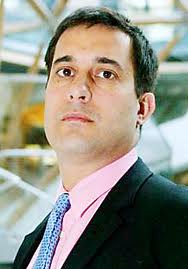
This story (on which I originally commented in March) is in the news because Michael Irwin (pictured), who heads up the campaign group SOARS (Society for Old Age Rational Suicide),  gave an exclusive interview to the Daily Mirror reporting that an 83 year old man with early dementia had killed himself at Dignitas seven weeks ago. The Mirror then splashed it on their front page. Now other news outlets are playing catch up in the usual feeding frenzy.

Irwin claims to have ‘helped’ the (unnamed) man in question by referring him to a London psychiatrist (currently also unnamed) who provided him with a medical certificate to say that he was mentally competent enough to make an informed decision about being helped to kill himself.

Irwin believes that assisted suicide should be available to elderly people on demand and seems determined to make himself a martyr for the pro-euthanasia cause by progressively pushing the legal boundaries so this case was very helpful to his cause.

According to the Daily Mirror he now claims to have helped at least 25 people to die at Dignitas.

In 2005 the General Medical Council found him guilty of serious professional misconduct and struck him off the medical register after he admitted supplying sleeping pills to help a friend die although you will seldom see this reported.

Ever since, ironically and curiously, he seems to have escaped prosecution by virtue of the fact that he is no longer a registered medical practitioner. This is in spite of the fact that encouraging or assisting a suicide remains a crime carrying up to a 14 year prison sentence under the Suicide Act 1961.

This is because the Director of Public Prosecutions has decided that he hasn’t yet fulfilled his prosecution criteria. The problem this has created is that Irwin will go on annexing the Sudetenland until he provokes a reaction from the DPP or police because he sees that any reaction will give even more publicity to his cause.

However there is now a new twist to the tale. In deliberately concealing the identity of the London psychiatrist who issued the certificate of mental capacity to this patient Irwin may well now be obstructing the course of justice.

The Director of Public Prosecutions makes it clear that doctors acting in a professional capacity to assist a suicide are likely to be prosecuted and the General Medical Council (GMC) has warned that such doctors risk censure, including being struck off the medical register (see details of DPP and GMC guidelines here). 

That would seem to place the unnamed psychiatrist at risk of both being prosecuted and also losing his licence to practice.

So at very least it would seem that this case should be fully investigated by the police and the GMC.

However on past form I would expect that Irwin will make it extremely difficult for them. He has cleverly, with the media’s full cooperation, created an unsolved mystery that will run and run and ensure that he himself stays in the media spotlight.

The reason for this is that Irwin is actually a campaigner who craves publicity. So he will talk to the media when it suits him but will also withhold incriminating information when it best suits his cause. 

He is playing ‘catch me if you can’.

I suspect he would quite like to be prosecuted to give his cause even more of the oxygen of publicity and will continue to push the envelope more and more until he elicits a response.

Those selling newspapers are of course only too happy to oblige but in the process they risk fuelling more anxiety and suicide contagion amongst the worried well.

What we learn from Irwin is that pro-euthanasia campaigners will always push the boundaries. This is because once you accept the argument that there is such a thing as a life not worth living it is not possible to draft a law to encompass all who would like to fall within its remit without eventually opening it up to everyone.

The minute assisted suicide is allowed for anyone at all others will come using the same arguments of  compassion and autonomy with allegedly equally deserving cases that fall just outside the existing legal boundaries. And they will claim that in the interests of equality they should have access to it too.

And so we see in any jurisdiction where euthanasia or assisted suicide has been legalised that incremental extension steadily takes place (eg Oregon, Belgium, Netherlands).

First there is a year by year increase in numbers and then, accompanying this, a widening of the categories of people to be included.

First we have mentally competent, adults with less than six months to live (as Dignity in Dying and Lord Falconer are pushing for here). Then there are those who are ‘suffering unbearably’ (in mind or body) but not terminally ill; then minors who are judged capable of making up their own minds; then the mentally incompetent who ‘would have wanted it’ had they been able to say.  

Irwin wants assisted suicide to be available not just for those who have early dementia, but for any elderly people who feel that their time has come.

The problem is that one cannot grant the legal right to assisted suicide to any group without at the same time removing legal protection from other similar people.

If the law ever were to change in this country vulnerable people would feel constrained to end their lives for fear of being a burden upon loved ones. Or alternatively loved ones would feel constrained to help their determined elderly relatives.  

This pressure would be felt with real intensity at this time of economic recession when many families are struggling to make ends meet.

Given the number of people and organisations who stand to gain financially from the deaths of elderly people it would be a certain recipe for personal and institutional elder abuse.

People with dementia and their families need the best possible care and support, not campaigns for the removal of their legal protection.

Our current law provides the right balance. On the one hand the penalties it holds in reserve act as a powerful deterrent to exploitation and abuse. On the other hand it gives discretion to prosecutors and judges in dealing with hard cases. It does not need changing.

The odd thing about this whole drama is why this 83 year old man, given his obvious mental capability, did not simply take his own life without requiring assistance.

But then, had he done that, it would not have been an international news story and would not have helped Michael Irwin’s campaign.

Sunday, 17 March 2013

Psychiatrist who supplied report to man with dementia so he could kill himself at Dignitas needs to be investigated by the police


The Sunday Times (£) reports this morning that an 83 year old British man with dementia is to travel to Switzerland for an assisted suicide. If he does so he will become the first known Briton suffering from the condition to die at Dignitas, the Swiss suicide organisation.

The professional man, whose dementia is at an early stage, has apparently obtained a report from an (as yet unnamed) London psychiatrist that states he is ‘mentally competent’ to decide to end his life. 

He says he cannot face suffering more advanced dementia, nor the strain it will place on his loved ones.

Michael Irwin (pictured), a retired GP and co-ordinator of the ‘Society for Old Age Rational Suicide’ (SOARS), which campaigns for elderly people to have the legal right to have help to kill themselves, even if their medical conditions are not life-threatening, is helping the man with his travel arrangements and appears to be the source of the story.

Irwin argues that the elderly may prefer resources that would be spent on their healthcare to instead go to their grandchildren.

‘The desire to “stop being a burden” on one’s family, and to avoid squandering financial resources perhaps better spent on grandchildren’s further education, could become the final altruistic gesture… Part of what makes a patient’s suffering intolerable could be the realisation that it is . . . ruining other people’s lives. Then, a doctor assisted suicide could be a rational moral act.’

Irwin was previously head of the Voluntary Euthanasia Society (now euphemistically rebranded 'Dignity in Dying'(DID)). His new organisation SOARS uses the same arguments as DID but has a more radical agenda, believing that assisted suicide should be available for all elderly people, whether terminally ill or not.

Irwin was previously
struck off the medical register by the General Medical Council in 2005 for trying to help a friend kill himself. He admitted obtaining sleeping pills to help his friend die and a GMC panel found him guilty of serious professional misconduct. 

He has since helped no less than nine people kill themselves, previously begging the Director of Public Prosecutions (DPP) to put him away so that he could become a martyr for the pro-euthanasia movement. 

Irwin has curiously however not been prosecuted for any of these cases on the basis that he has not fulfilled the DPP’s criteria for a prosecution being in the public interest.


Assisting or encouraging a suicide is a criminal offence which potentially carries a custodial sentence of up to 14 years under the Suicide Act 1961. But prosecutions can only take place on the authority of the DPP. It is very important to note that since 2009, when the Act was amended, the offence of encouraging or assisting suicide can be committed even where a suicide or an attempt at suicide does not actually take place.

The DPP has to decide in a given case both that there is enough evidence to bring a prosecution and also that it is in the public interest to do so.

In establishing the latter he takes into consideration 16 factors tending towards prosecution and six factor sending against.

Irwin has escaped prosecution before under these criteria and it seems likely that he may do so again.

But the unnamed London psychiatrist who allegedly provided the report to say that this man with dementia is mentally competent enough to have assistance to kill himself in Switzerland is in a different position altogether.

The DPP guidance makes it clear that ‘a person who does not do anything other than provide information to another which sets out or explains the legal position in respect of the offence of encouraging or assisting suicide under section 2 of the Suicide Act 1961 does not commit an offence under that section.’

It was on this basis that the UK General Medical Council on 31 January this year advised that doctors ‘who provide access to a patient’s records where a subject access request has been made in accordance with the terms of the Data Protection Act 1998’ are unlikely to face scrutiny.

However this psychiatrist seems to have done more than that.

One of the DPP’s criteria that makes a prosecution more likely is that ‘the suspect was acting in his or her capacity as a medical doctor, nurse, other healthcare professional, a professional carer [whether for payment or not], or as a person in authority, such as a prison officer, and the victim was in his or her care.’

In line with this, the GMC, in its own 6-page guidance for pre-hearing investigators, makes it clear that censure, including being struck off the medical register, is probable when:

•the doctor’s encouragement or assistance depended upon the use of privileges conferred by a licence to practise medicine (such as prescribing) or took place in the context of a doctor-patient relationship
•the doctor knew, or should reasonably have known, that their actions would encourage or assist suicide
•the doctor acted with intent to encourage or assist suicide


It is also ‘likely’ when a doctor is:

•writing reports knowing, or having reasonable suspicion, that the reports will be used to enable the person to obtain encouragement or assistance in committing suicide

The police and the GMC both need to investigate this psychiatrist who, if the reports in the Sunday Times are correct, may well have committed the criminal offence of encouraging or assisting suicide even though the man in question has not yet travelled to Dignitas. 

As I told the Sunday Times earlier this week, we’ve seen in European countries that have legalised euthanasia that once you allow it in any circumstances at all you inevitably end up widening the category of people to be included.

This case shows that if we were to change the law in this country there would be pressure to apply it to dementia patients as is already happening in the Netherlands.

Our current law provides the right balance. On the one hand the penalties it holds in reserve act as a powerful deterrent to exploitation and abuse. On the other hand it gives some discretion to prosecutors and judges in dealing with borderline and hard cases. It does not need changing.

Any change in the law would inevitably place pressure on vulnerable people to end their lives for fear of being a burden upon loved ones and this pressure would be particularly intensely felt at this time of economic recession when many families are struggling to make ends meet.

Thursday, 14 October 2010

The new healthcare professionals’ group seeking to legalise assisted suicide includes a number of well known campaigners

A new group of ‘health professionals' has this week joined the growing number of ‘societies’ and ‘forums’ seeking legal permission for doctors to assist with suicide.

‘Healthcare Professionals for Change’ follows on the heels of Libby Wilson’s FATE (Friends at the End), Michael Iriwin’s SOARS (Society for Old Age Rational Suicide), Philip Nitschke’s EXIT International and the Secular Medical Forum (also founded by Michael Irwin) in pushing for a change in the law which would allow doctors to end the lives of patients in their care.

The group’s leader, Oxford GP Ann McPherson, initially claimed a membership of twelve (which although a small number would have made it larger than most of the aforementioned) but this seems now to have grown, judging by the ‘supporters’ page on its website, to around 100 (a figure still only representing about 0.05% of the country’s estimated 200,000 doctors).

Prominent amongst HPFC’s supporters are several well known campaigners for the liberalisation of the law on assisted suicide and abortion. These include former MP Evan Harris, Simon Kenwright, Wendy Savage (who leads a similar doctors’ pressure group on abortion), David Paintin and Ray Tallis.

Evan Harris (pictured) has campaigned for some years for the legalisation of assisted suicide through both the British Medical Association and also as a back-bencher in Parliament, but with little success. Interestingly he lost his West Oxford and Abingdon seat in the general election earlier this year on a large swing to a candidate who opposed his views on a number of ethical issues.

Ray Tallis held the influential position of chairman of the Ethics Committee of the Royal College of Physicians (RCP) when that organisation went briefly neutral on the issues in 2005. After he had vacated the chair, and just before the debate on Lord Joffe’s Assisted Dying for the Terminally Ill Bill in May 2006, the RCP reverted to opposing any change in the law after seeking the opinions of its members, a position it has held ever since.

Sir Richard Thompson, currently President of the Royal College of Physicians, responding to the launch, has just this week eloquently outlined the reasons why a clear majority of the College’s members still do not support a change in the law.

They are in good company. Other official doctors’ bodies opposing any change in the law to allow assisted suicide or euthanasia are the British Medical Association (BMA), the Association for Palliative Medicine (APM), the British Geriatric Society (BGS), the Royal College of General Practitioners (RCGP) and every other Royal Medical College that has expressed an opinion on the matter.

The British Geriatric Society earlier this year issued a strong statement on assisted suicide which outlines its concerns about how a change to the law would remove protection from vulnerable elderly people. The full statement is most worthy of study by all who take an interest in this debate, especially given that the media seem to give far more column inches and broadcast time to groups such as Dr McPherson’s than they do to the official bodies which represent the majority of doctors.

HPFC is, perhaps not surprisingly, being sponsored by the pressure group Dignity in Dying (formerly the Voluntary Euthanasia Society) whose Chief Executive, Sarah Wootton, has said: ‘It’s a real move forward. It’s important for doctors to be able to challenge the views of the BMA and other medical bodies. They need to be able to represent a wider viewpoint.’

This is a rather curious statement given that the minority of doctors who support assisted suicide and euthanasia have been trying to change BMA policy for years, and have been consistently unsuccessful precisely because they do not represent the more widely held viewpoint that doctors should not be involved in assisted suicide and euthanasia and that any law legalising either practice would pose grave dangers for vulnerable elderly and disabled people.

Dr Christopher Hufeland, Goethe's doctor, warned in 1806, ‘The physician should and may do nothing else but preserve life. Whether it is valuable or not, that is none of his business. If he once permits such considerations to influence his actions, the doctor will become the most dangerous man in the state.’

The words of the Hippocratic Oath on the matter, ‘I will give no deadly medicine to anyone, nor suggest such counsel’ are thankfully still supported by a majority of doctors today.

As I suggested a couple of weeks ago, we need to remember that there have always been a minority of doctors who support euthanasia, but they are only a minority.

Sunday, 27 June 2010

What will it take for the Director of Public Prosecutions (DPP) actually to prosecute someone for assisted suicide?

The Director of Public Prosecutions (DPP), Keir Starmer, whose job it is to prosecute people who break the law, announced last Friday that he did not consider it to be in the public interest to bring a case against former GP Michael Irwin (pictured), for assisting the suicide of pancreatic cancer sufferer Ray Cutkelvin in 2006.

It was not that he lacked evidence to do so. Irwin had literally begged the DPP to put him away so that he could become a martyr for the pro-euthanasia movement. He had even provided documentary evidence of his involvement in terms of a £1,500 payment towards paying for Cutkelvin's visit to the Dignitas Suicide facility in Zurich.

In fact, Irwin, previously chairman of the Voluntary Euthanasia Society (now euphemistically rebranded Dignity in Dying) has helped no less than nine people kill themselves, and had even been struck off by the General Medical Council in 2005 for a past attempt.

But nonetheless, the DPP judged that although he had clearly done the deed, it was not in the public interest to make him stand trial.

His justification for this was that Irwin’s case did not fulfil enough of the 22 ‘prosecution criteria’ that he had made public at the request of the Supreme Court ruling on the case of Debbie Purdy last July.

Assisted suicide remains illegal in Britain and still carries a custodial sentence of up to 14 years for convicted offenders. But of over 130 British citizens who have so far travelled to Switzerland to be helped to kill themselves, none have even been tried, let alone convicted.

And the three most recent cases (Downes, Bateman and Rees) have all been let off on the grounds that they were ‘wholly motivated by compassion’ – a mitigating factor seemingly open to liberal interpretation and not easily testable in court (especially given that the key witness in all cases is dead and unable to give evidence).

It appears a pattern is emerging. The police seem reluctant to investigate. The DPP looks to be unwilling to prosecute. Juries are reticent to convict and judges, for those very few cases that do reach this stage, are giving light sentences.

This sort of ‘legal sanction’ is exactly what first happened in the Netherlands and led eventually to an eventual change in the law in that country - legalisation by stealth.

Holland now reports over 1,000 cases of involuntary euthanasia a year, an annual increase in cases of voluntary euthanasia and dozens of disabled children being ‘put down’ under the so-called Groningen protocol.

No wonder that disability rights leaders in this country have just launched a Resistance Campaign asking MPs to sign a charter supporting better care and services for elderly and disabled people and no change in the law.

So far Parliament has stood firm, as have professional groups like the British Medical Association, believing that any change in the law would be a threat to public safety.

One wonders however what it will take for the DPP, the very person appointed to uphold the law, actually to prosecute someone. If he wants the current law to act as an effective deterrent against abuse he will at some point have to be willing to show some teeth.

But the impression he has given with this latest judgement, is that any would-be assisters may go at least as far as Dr Irwin has thus far, without any fear of legal repercussion.