Showing posts with label Health Professionals for Change. Show all posts

Thursday, 14 October 2010

The new healthcare professionals’ group seeking to legalise assisted suicide includes a number of well known campaigners

A new group of ‘health professionals' has this week joined the growing number of ‘societies’ and ‘forums’ seeking legal permission for doctors to assist with suicide.

‘Healthcare Professionals for Change’ follows on the heels of Libby Wilson’s FATE (Friends at the End), Michael Iriwin’s SOARS (Society for Old Age Rational Suicide), Philip Nitschke’s EXIT International and the Secular Medical Forum (also founded by Michael Irwin) in pushing for a change in the law which would allow doctors to end the lives of patients in their care.

The group’s leader, Oxford GP Ann McPherson, initially claimed a membership of twelve (which although a small number would have made it larger than most of the aforementioned) but this seems now to have grown, judging by the ‘supporters’ page on its website, to around 100 (a figure still only representing about 0.05% of the country’s estimated 200,000 doctors).

Prominent amongst HPFC’s supporters are several well known campaigners for the liberalisation of the law on assisted suicide and abortion. These include former MP Evan Harris, Simon Kenwright, Wendy Savage (who leads a similar doctors’ pressure group on abortion), David Paintin and Ray Tallis.

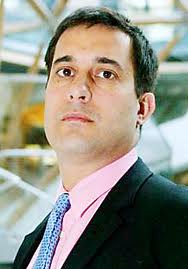
Evan Harris (pictured) has campaigned for some years for the legalisation of assisted suicide through both the British Medical Association and also as a back-bencher in Parliament, but with little success. Interestingly he lost his West Oxford and Abingdon seat in the general election earlier this year on a large swing to a candidate who opposed his views on a number of ethical issues.

Ray Tallis held the influential position of chairman of the Ethics Committee of the Royal College of Physicians (RCP) when that organisation went briefly neutral on the issues in 2005. After he had vacated the chair, and just before the debate on Lord Joffe’s Assisted Dying for the Terminally Ill Bill in May 2006, the RCP reverted to opposing any change in the law after seeking the opinions of its members, a position it has held ever since.

Sir Richard Thompson, currently President of the Royal College of Physicians, responding to the launch, has just this week eloquently outlined the reasons why a clear majority of the College’s members still do not support a change in the law.

They are in good company. Other official doctors’ bodies opposing any change in the law to allow assisted suicide or euthanasia are the British Medical Association (BMA), the Association for Palliative Medicine (APM), the British Geriatric Society (BGS), the Royal College of General Practitioners (RCGP) and every other Royal Medical College that has expressed an opinion on the matter.

The British Geriatric Society earlier this year issued a strong statement on assisted suicide which outlines its concerns about how a change to the law would remove protection from vulnerable elderly people. The full statement is most worthy of study by all who take an interest in this debate, especially given that the media seem to give far more column inches and broadcast time to groups such as Dr McPherson’s than they do to the official bodies which represent the majority of doctors.

HPFC is, perhaps not surprisingly, being sponsored by the pressure group Dignity in Dying (formerly the Voluntary Euthanasia Society) whose Chief Executive, Sarah Wootton, has said: ‘It’s a real move forward. It’s important for doctors to be able to challenge the views of the BMA and other medical bodies. They need to be able to represent a wider viewpoint.’

This is a rather curious statement given that the minority of doctors who support assisted suicide and euthanasia have been trying to change BMA policy for years, and have been consistently unsuccessful precisely because they do not represent the more widely held viewpoint that doctors should not be involved in assisted suicide and euthanasia and that any law legalising either practice would pose grave dangers for vulnerable elderly and disabled people.

Dr Christopher Hufeland, Goethe's doctor, warned in 1806, ‘The physician should and may do nothing else but preserve life. Whether it is valuable or not, that is none of his business. If he once permits such considerations to influence his actions, the doctor will become the most dangerous man in the state.’

The words of the Hippocratic Oath on the matter, ‘I will give no deadly medicine to anyone, nor suggest such counsel’ are thankfully still supported by a majority of doctors today.

As I suggested a couple of weeks ago, we need to remember that there have always been a minority of doctors who support euthanasia, but they are only a minority.

Wednesday, 6 October 2010

When you see a new pro-euthanasia doctors group given a media soapbox next week remember that they constitute a small vocal minority

A new pro-euthanasia group called Health Professionals for Change is due to be launched on 13 October at the Kings Fund.

The group will be chaired by Oxford GP Ann McPherson (pictured), who herself is dying of pancreatic cancer and the launch is expected to be attended by a small number of high profile doctors including former GMC chairman Sir Graeme Catto and Geriatrician Dr Ray Tallis.

The event will, unsurprisingly, be supported by Dignity in Dying, formerly the Voluntary Euthanasia Society (VES), which has in recent years undergone an image makeover including a refashioning of its stated aims, in order to achieve its aim of establishing legally sanctioned compassionate killing in Britain.

McPherson is quoted in the Observer using words that could have been (and most probably were) drafted for her by the DID press office: ‘Many of us believe dying patients should not have to suffer against their wishes at the end of life. Alongside access to good quality end-of-life care, we believe that terminally ill, mentally competent patients should be able to choose an assisted death, subject to safeguards.’

In order to disguise their real intentions, DID have in recent years attempted to position themselves as champions of ‘good quality end-of-life care’ as a smokescreen for advancing their real agenda of legalised compassionate killing. But their malleable key terms ‘terminally ill’, ‘assisted death’ and ‘safeguards’ are, here as typically, left conveniently undefined.

The pro-euthanasia lobby have been repeatedly frustrated in Parliament, being twice defeated in the House of Lords since 2006, and have also been repeatedly blocked by the medical institutions; hence this new group.

Doctors have historically long been opposed to euthanasia and assisted suicide. The Hippocratic Oath forbids both as do more recent codes of ethics such as the Declaration of Geneva and The International Code of Medical Ethics.

The majority of doctors in the UK also remain opposed to a change in the law and medical opposition has actually intensified in recent years. The largest recent surveys show only 22-38% of all doctors in favour of a change.

Opposition to euthanasia and assisted suicide is strongest amongst doctors who work most closely with dying patients – neurologists, geriatricians and specialists in palliative medicine. In fact almost 95% of the membership of the Association for Palliative Medicine of Great Britain & Ireland, which represents over 800 UK specialists in palliative care, is opposed to any change in the law and the association has been a core member organization of the anti-euthanasia alliance Care Not Killing since the latter’s formation in 2005.

The British Medical Association (BMA), the Royal College of Physicians (RCP), the Royal College of General Practitioners (RCGP), the Royal College of Anaesthetists, the Royal College of Surgeons of Edinburgh and the British Geriatric Society also remain strongly opposed to any legal change.

Why is it that doctors who have the most experience working with dying patients are most strongly opposed to euthanasia and assisted suicide? Probably because they both understand how vulnerable dying patients are and also know how to manage pain and other distressing symptoms (physical, psychological and spiritual) at the end of life. If you know what to do in a crisis, you are much less likely to reach desperately for a syringe of injectable poison when confronted with someone who is begging for relief.

According to a survey by the Economist Intelligence Unit published in July this year the UK leads the way globally in terms of its hospice care network and statutory involvement in end-of-life care. Specifically it ranks first in the ‘Quality of End-of-Life Care’ category, which includes indicators such as public awareness, training availability, access to pain killers and doctor-patient transparency.

Of course there is always room for improvement, and we must strive to be even better and to make the best care more widely accessible, but given that requests for euthanasia and assisted suicide are extremely rare when patients are properly cared for (most palliative physicians report less than ten cases of patients with a persistent wish to die in a practising lifetime) the question has to be asked, ‘Why is it that euthanasia and assisted suicide in Britain are so seldom out of the media spotlight?’

The answer is very clear. We have an extremely well-funded and resourced pro-euthanasia movement in this country, with plenty of media and celebrity support and public relations machinery which ensures that it is only seldom neither seen nor heard.

So when you see a small group of doctors given a soapbox next week to parade 'hard cases' and mouth specious euphemisms in an attempt to soften up public and parliamentary opinion on legalising compassionate killing, remember that they constitute a minority of a profession that remains largely opposed to any change in the law.