Showing posts with label HPAD. Show all posts

Tuesday, 1 October 2013

Opposition to the legalisation of assisted suicide is based on solid evidence and sound argument Sir Terence

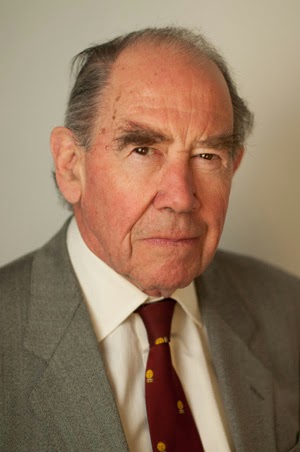
Sir Terence English (pictured) is an 81 year old retired cardiac surgeon who lives in Oxford. He is also a patron of Dignity in Dying (the former Voluntary Euthanasia Society) and is on the steering group of its medical wing, Healthcare Professionals for Assisted Dying (HPAD).

As such he is one of a small minority of doctors in this country (a quarter of one per cent belong to HPAD) who think that medical practitioners should be licensed by the state to dispense lethal drugs to mentally competent, terminally ill adults who wish to kill themselves.

This is a policy opposed by the British Medical Association, the World Medical Association, the Association for Palliative Medicine, the British Geriatric Society and virtually every Royal Medical College including the RCGP and the RCP.

It is also contrary to every serious code of medical ethics that has ever been drafted including the Hippocratic Oath, the Declaration of Geneva, the International Code of Medical Ethics and the Statement of Marbella.

But last weekend Sir Terence wrote a letter to the Sunday Telegraph accusing me of ‘scaremongering’ for arguing that giving doctors such authority and power is not a good idea.

He commended the BBC for giving Lord Falconer a platform to promote his ‘assisted dying’ bill unopposed on BBC breakfast television and claimed that the bill had a ‘narrow focus’ which did not involve ‘euthanasia’ or ‘disabled people’ – only ‘mentally competent, terminally ill adults’.
Tellingly he gave no arguments to support his position.

‘Assisted dying’ is a euphemism with no meaning in law but it means supplying lethal drugs to people who are terminally ill with the purpose of helping them to commit suicide.

The line between assisted suicide and euthanasia is very thin. Assisted suicide is helping someone to kill themselves. Euthanasia is killing them with or without their permission. The intention in both is the same and the acts are thereby morally and ethically equivalent regardless of the fact that they are illegal under different UK laws (the Suicide Act 1961 and the murder law respectively). Assisted suicide is simply euthanasia one step back.

But more than this, from a practical point of view one merges into the other. If a doctor places lethal drugs in a person’s hands it is assisted suicide, but on his tongue it is euthanasia. If the doctor sets up a syringe-driver and pushes it himself it is euthanasia, but if the patient applies pressure or flicks the switch it is assisted suicide.

In one in seven cases of assisted suicide there are problems with ‘completion’ leaving the doctor to step in to finish the job, which is why legalising one inevitably legalises the other. There will also inevitably be those who claim that they are being discriminated against because they lack the capacity, even with assistance, to kill themselves, and so need someone to do it for them. This is why any law allowing assisted suicide only (and not euthanasia) would immediately be open to challenge under equality laws.

The reality is that assisted suicide is just another form of euthanasia.

Claiming that Falconer’s bill is not for disabled people but only for terminally ill people is equally disingenuous. This is because almost all terminally people are also disabled, and many disabled people are either terminally ill, have life limiting conditions, or are susceptible to sudden unexpected and potentially life-threatening deteriorations in health.

Disabled people and people with terminal illness are simply not distinct groups but considerably overlapping categories. This is why every major disability advocates group in the UK – including Disability Rights UK, SCOPE, Not Dead Yet and UKDPC – are opposed to a change in the law.  Paralympian Tanni Grey-Thompson, in passionately voicing these concerns, has recently called assisted suicide a ‘chilling prospect for disabled people’.

Falconer’s three criteria of ‘terminally ill’, ‘adult’ and ‘mentally competent’ are equally malleable and open to interpretation as argued in the recent critique by leading parliamentary think tank ‘Living and Dying Well’.

Doctors are notoriously unreliable in estimating lifespans, ‘adult’ is easily open to extension to 12 to 14 year olds using the concept of ‘Gillick competence’ and the experience in Belgium and the Netherlands shows that mentally incompetent people (babies with severe disabilities and adults with dementia) quickly get drawn into the remit of laws allowing euthanasia or assisted suicide. Assessing mental competence is a specialised skill that not all doctors have and it can easily be clouded by the presence of depression, which itself increases suicidal ideation.

It is for these reasons that in every country which has legalised any form of ‘assisted dying’ we have seen incremental extension – an increase in total numbers, a broadening of categories of people to be included and an increase in ending life through parallel means such as deliberate withdrawal of treatment, intentional morphine overdose or so-called ‘terminal sedation’.

But the biggest problem with giving doctors the power and authority to end life, even with a patient's consent, is that doctors cannot be trusted with this kind of power.

Whatever one thinks of the morality of abortion, very few will disagree that the abortion law has been flagrantly abused, and yet it employs a very similar system to that proposed by Falconer - giving doctors licence to end life in so-called strict circumstances. Currently about 98% of all UK abortions (196,000 each year) are outside the bounds of the Abortion Act. Illegal pre-signing of authorisation forms is widespread - perjury on a massive scale – and yet no prosecutions take place. We would see the same flouting of the law and pushing of boundaries, along with the same reluctance by the police or crown prosecution service to intervene, if assisted suicide or euthanasia were to be legalised.

Doctors are human and prone to financial and emotional pressure, but there are also some who sadly will abuse any power given to them. The recent experience of the Liverpool Care Pathway debacle, where some doctors and other health professionals abused what was essentially a good therapeutic tool through laziness, neglect or deliberate malpractice, underlines further why they should not be trusted with the even greater power to end life actively. Allowing doctors to have this power would make them the most dangerous people in the state.

Our current law is clear and right. By prohibiting all euthanasia and assisted suicide it acts, through the penalties it holds in reserve, as a powerful deterrent to exploitation and abuse. And by allowing some discretion to judges and prosecutors in hard cases it exercises this stern face with a kind heart. It does not need changing.

To point out the consequences of changing the law is not scaremongering as Sir Terence English would have us believe. It is to exercise caution in the light of solid evidence and sound argument.

The first duty of parliament is to protect its citizens and this is what the current law does. We cannot chip away at it without at the same time removing legal protection from vulnerable people and putting them under pressure to end their lives so as not to be a financial or emotional burden to others.

Further Reading


Tuesday, 11 September 2012

BMA Council elects strong advocate of euthanasia and assisted suicide as new deputy chair

The British Medical Association Council, the governing body of the UK doctors’ trade union, has just elected a new deputy chairman.

Retired Cheshire GP Kailash Chand (pictured) was chosen by the council following a three-way contest between him, London specialty trainee in anaesthesia Tom Dolphin and Birmingham GP Fay Wilson.

The BMA reports Dr Chand as saying that he will continue to ‘champion the principles of universal healthcare that have made the NHS such an envy of the world’.

This is what we would expect.

However it does not tell us that Dr Chand is a staunch advocate of legalising both assisted suicide and euthanasia.

He attempted to get the association to back legalising ‘assisted death’ (which for him means both euthanasia and assisted suicide) at the BMA annual representative meeting in 2009.

His motion, which was soundly defeated, read as follows:

‘This meeting supports the introduction of legislation to allow people who are terminally ill but 'mentally competent', the choice of an assisted death. Further, the law should not criminalise people who accompany those who make rational decisions to end their suffering’

He told me personally at the time that he was determined to move the position of the BMA and would be trying again.

He has since joined the pro-euthanasia lobby group ‘Health Professionals for Assisted Suicide’ (HPAD) which operates as the medical arm of the former Voluntary Euthanasia Society, now rebranded ‘Dignity in Dying’ (DID).

However, whilst DID and HPAD have always said that they back only assisted suicide (helping people kill themselves) and not euthanasia (killing people directly), Dr Chand has made it very clear in a recent BMA blog that his ambitions are more far-reaching.

He boldly declares, ‘We must enact legislation to decriminalise acts of euthanasia and physician-assisted suicide, for the following compelling reasons’, and then gives a list of ‘reasons’ that could have been cut and pasted from the DID website.

I wonder if Dr Chand has declared these ‘interests’ to BMA Council or BMA members whom I’m sure would be very interested to know about them.

Meanwhile the BMA itself remains firmly opposed to any change in the law and has never supported the legalisation of either euthanasia or assisted suicide throughout its 180 year history.

With the government last week appointing two health ministers who have since declared their support for legalising assisted suicide (Anna Soubry and Norman Lamb) and Lord Falconer and Margo Macdonald about to introduce new bills in the House of Lords and Scottish Parliament respectively it appears that we are in for a very interesting few months.

I for one will be watching Dr Kailash Chand very carefully indeed.

Friday, 22 June 2012

Open letter to Sir Graeme Catto, Chairman of Dignity in Dying, over his misleading polling question

I have just made a formal complaint about a polling question which I believe may breach several Rules of the Market Research Society Code Guidelines.

The question was posed by two campaigning organisations, Dignity in Dying (DID) (aka the Voluntary Euthanasia Society) and its offspring Healthcare Professionals for Assisted Dying (HPAD), with the aim of moving the doctors’ union, the British Medical Association, to a neutral position on ‘assisted dying’. It was framed as part of an orchestrated campaign to legalise assisted suicide in Britain.

My letter to Sir Graeme Catto, Chairman of Dignity in Dying, is pasted below.

The immediate context is that members of DID and HPAD have flooded the BMA annual representative meeting next week with motions calling for the union to adopt a neutral position on ‘assisted dying’ ahead of a new bill being introduced into parliament.

One of these motions is to be debated on Wednesday 27 June and the British Medical Journal is running a campaign highlighting the survey question in an editorial by the journal’s editor in chief, Fiona Godlee.

The first three sentences of a press release the BMJ issued last week to this end read as follows:

‘The BMJ today supports a call for leading UK medical bodies to stop opposing assisted dying for terminally ill, mentally competent adults. Healthcare Professionals for Assisted Dying (HPAD), wants the BMA and royal colleges to move their position from opposition to neutrality. The call comes as a new poll commissioned by Dignity in Dying found that, of 1000 GPs, 62% support neutrality.

Detail of the question is outlined in a joint press release from DID and HPAD and in a copy of the poll results.

I have already criticised Fiona Godlee on this blog and go into the polling question (and a related one) in much more detail there.

Letter to Sir Graeme Catto

Dear Sir Graeme,

I am writing to inform you that we have lodged an official complaint with the Market Research Society about a polling question which we believe may breach several Rules of the Market Research Society Code Guidelines.

The question below, which was given substantial coverage by the British Medical Journal in an Editorial last week, was posed by Dignity in Dying (DID) and Healthcare Professionals for Assisted Dying (HPAD), with the aim of moving the doctors’ union, the British Medical Association, to a neutral position on ‘assisted dying’.

A motion calling for the union to adopt a neutral position on ‘assisted dying’ is to be debated at the BMA ARM on Wednesday 27 June.

Detail of the question is outlined in a joint press release from DID and HPAD and in a copy of the poll results.

The poll was conducted by medeConnect Healthcare Insight (the research arm of Doctors.Net.UK) between 16 and 22 May 2012 who asked 1004 GPs an online question as follows:

‘Opinion polls indicate that doctors are divided on the issue of assisted dying for the terminally ill, with approximately 60% opposed to change. Do you agree or disagree that medical bodies (RCGP, BMA) should adopt a position of studied neutrality* on the issue of assisted dying for terminally ill, competent adults.*A position of studied neutrality indicates that a medical organisation is neither supportive of, nor opposed to a change in the law on assisted dying. A neutral position recognises and respects the diversity of personal and religious views of its members and their patients, and encourages open discussion.’

To this 12% voted ‘strongly agree’, 50% ‘agree’, 7% ‘don’t know’, 21% ‘disagree’ and 11% ‘strongly disagree’. 12% plus 50% equals 62%.

In our view this is contrary to Rule B14 of the MRS Code which states ‘Members must take reasonable steps to ensure all of the following:

•‘that Respondents are not led to a particular view’
•‘that responses are capable of being interpreted in an unambiguous way’

Kind regards

Peter

Saturday, 9 June 2012

Retired doctors working together to bring euthanasia to a town near you – SMF, DID, HPAD and SOARS

I see that the Secular Medical Forum (SMF) is holding a fringe debate at the BMA annual conference featuring Raymond Tallis of ‘Healthcare Professionals for Assisted Dying’ (HPAD).

HPAD was originally launched under the name of ‘Healthcare Professionals for Change’ and features a number of well-known campaigners amongst its supporters.

Tallis is one of eight retired doctors on HPAD’s thirteen-person steering group, which he chairs, and also held the influential position of chairman of the Ethics Committee of the Royal College of Physicians (RCP) when that organisation went briefly neutral on euthanasia in 2005.

After he had vacated the latter chair, and just before the debate on Lord Joffe’s Assisted Dying for the Terminally Ill Bill in May 2006, the RCP reverted to opposing any change in the law after seeking the opinions of its members, a position it has held ever since. He has since become an ardent advocate for assisted suicide.

As I reported last week HPAD was set up in 2010 to push for the legalisation of assisted suicide. They have been increasingly active and now have 520 members (a figure representing about 0.25% of the country’s estimated 200,000 doctors).

HPAD’s members were almost certainly responsible for nine almost identical euthanasia motions put forward to the annual representative meeting of the British Medical Association later this month.

These motions all call for the BMA to adopt ‘a neutral position’ on ‘assisted dying’ and all bear the fingerprints of the pressure group Dignity in Dying (formerly the Voluntary Euthanasia Society) which campaigns for the legalisation of assisted suicide for ‘mentally competent terminally ill adult patients’.

As a result on Wednesday 27 June the BMA will be debating whether it should drop its long opposition to assisted suicide and euthanasia (Item 332 on Agenda).

This move is part of a larger campaign that Dignity in Dying (DID) is running over the next month leading up to a celebrity-endorsed lobby on parliament on 4 July.

HPAD was set up under the auspices of DID and carries the latter’s logo prominently on its website.

That website informs us that DID ‘provides administrative and financial support’ to HPAD, but ‘while sharing the same vision’, the two groups are ‘intellectually independent’.

However, as HPAD is officially listed neither as a company or charity, it is not unreasonable to conclude that it is basically part of DID.

The close cooperation between the organisations is evident in that two of the members of HPAD’s steering group, Ray Tallis and Sir Terence English, are also listed amongst DID’s patrons.

DID’s current chair, Sir Graeme Catto, another retired doctor and former chairman of the General Medical Council, was a member of the discredited Falconer Commission on Assisted Dying which made proposals about who to legalise assisted suicide earlier this year.

That Commission was conceived by DID, financed by one of its Patrons, Sir Terry Pratchett, and chaired by Lord Falconer who had previously attempted to legalise assisted suicide through an amendment to the Coroners Act in 2009.

According to its website the Secular Medical Forum believes that ‘assisted dying’ (a euphemism for assisted suicide and euthanasia) with adequate safeguards for terminally ill, competent adults, should be introduced in the UK as soon as possible’.

SMF is chaired by Dr Antony Lempert, also a member of HPAD, and its board of directors includes four other doctors: Colin Brewer, Richard Rawlins, Sara Melly and Anish Shah.

SMF’s founder Michael Irwin, a retired GP and a former Medical Director of the United Nations’, was also previously head of the Voluntary Euthanasia Society (now 'Dignity in Dying') and is currently leader of the controversial pro-euthanasia group ‘Society for Old Age Rational Suicide’.

SOARS uses the same arguments as DID but has a more radical agenda, believing that assisted suicide should be available for all elderly people, whether terminally ill or not.

Irwin was struck off the medical register by the General Medical Council in 2005 for trying to help a friend kill himself. He admitted obtaining sleeping pills to help his friend die and a GMC panel found him guilty of serious professional misconduct.

SMF director Colin Brewer was also struck off the medical register in 2006 after being found guilty of serious professional misconduct by the GMC following allegations of inappropriate drug prescribing for patients with addictions.

Just how active is SMF? It is rather difficult, but the answer is probably ‘not very’.

According to its annual accounts filed at Companies House it had income in the last financial year of £1,436, spent £513 on administration and has a bank balance of £923! By contrast, DID has an annual turnover of over £1million.

SMF, HPAD, DID and SOARS constitute a pro-death quadrumvirate, led by retired doctors with a lot of time on their hands and lots of experience in medical politics.

These doctors make up a tiny minority of Britain’s doctors but they are determined, articulate and well-organised. They have rejected the principle, enshrined in the Hippocratic Oath, Declaration of Geneva and International Code of Medical Ethics, that doctors should not kill their patients.

They are also used to getting their own way.

Democracies like Britain and trade unions like the BMA are vulnerable to small groups such as these. Be warned!