Friday, 8 April 2011

Oh no I've been rumbled! They got me!

All over the blogosphere today is the report that a super-sleuth blogger called Unity, who writes for two left-wing blogs called Liberal Conspiracy and Ministry of Truth, has uncovered a powerpoint presentation that I gave at a public meeting on the subject of abortion back in 2006.

I've been rumbled!

Apparently I am working secretly to reform the Abortion Act and have even been in communication with other people with similar aims. Shock!

I would like to pay public tribute to Unity (not his real name) for a truly outstanding piece of detective work!

He has masterfully retrieved a piece of work that has been in the public domain and distributed to anyone who has asked for it for over four years!

In future Unity could save himself a lot of trouble by visiting the CMF website. There he will find over 25,000 documents on a whole variety of issues at the interface of Christianity and medicine all of which can be downloaded freely.

In future if he or any other reader would like any other information written by me or published by the Christian Medical Fellowship I hope they will feel free to ask for it in the normal way.

And if they would like my opinion on a whole variety of other issues they are very welcome to check out this blog.

In so doing they will discover that I have for many years been working to restrict abortion, prevent the legalisation of euthanasia, ban animal-human hybrids, prevent HIV, protect human embryos, support developing world medical work, raise money for victims of natural disasters, oppose human trafficking, support minimum price for alcohol, encourage exercise, promote just trade, aid and debt policies, teach people about Jesus Christ etc etc.

My views on these matters are not secret and are easily deduced from what I have said and written.

Amazingly, to make it even easier, I even write under my own name! Now there's a radical suggestion.

Monday, 4 April 2011

Response to Tom Chivers’ (Daily Telegraph) comments on my previous blog about abortion and mental health

Tom Chivers of the Daily Telegraph has now responded to my criticism of his original article on the Dorries/Field amendment on abortion counselling.

Here is my response to his latest article. I have also attempted to post it on his blog but have so far been unsuccessful (probably me not understanding the technology properly).

Dear Tom,

Thanks for responding to the comments on my blog and for acknowledging the errors in your original post.

First let me say that I was not attempting to ‘fisk’ you (ie do a line by line rebuttal of your blog) as to do so would have taken far more time than I had then or have now.

I just wanted to correct your initial misreading of the evidence about the 30% figure – but I will come back to a full ‘fisk’ if need be :-)

May I also ask – as you are so rightly concerned about the linking of primary sources – that you actually link my blog directly in your article so that others can read my comments in full along with the responses.

May I also correct a continuing misinterpretation in your new post with respect to the 1.5-5.5% figure as I’m not sure you have yet understood this correctly.

It is easiest to understand if you quote the relevant sentences in Fergusson’s abstract in full.

They read as follows:

‘After adjustment for confounding, abortion was associated with a small increase in the risk of mental disorders; women who had had abortions had rates of mental disorder that were about 30% higher. There were no consistent associations between other pregnancy outcomes and mental health. Estimates of attributable risk indicated that exposure to abortion accounted for 1.5% to 5.5% of the overall rate of mental disorders.'

What I understand this to mean is:

1.Women who have abortions had a 30% higher incidence of mental health problems after correcting for all other possible confounding variables. Ie The risk is real
2.Other outcomes of pregnancy (eg miscarriage, stillbirth, live birth etc) don’t affect mental health in the same way
3.Abortion however only accounts for between 1.5% and 5.5% of all mental health problems in the general population.

It makes further sense if you look at Fergusson’s final section on ‘Implications’.

‘The conclusions drawn above have important implications for the ongoing debates between pro-life and pro-choice advocates about the mental health effects of abortion. Specifically, the results do not support strong pro-life positions that claim that abortion has large and devastating effects on the mental health of women. Neither do the results support strong pro-choice positions that imply that abortion is without any mental health effects. In general, the results lead to a middle-of-the-road position that, for some women, abortion is likely to be a stressful and traumatic life event which places those exposed to it at modest risk of a range of common mental health problems.’

Again you have neglected to mention the Royal College of Psychiatrists’ position on this. In the light of the Fergusson study (and others) they have now changed their official position to acknowledge that there are some studies which do show a risk to mental health from abortion. They are currently carrying out a further review and the RCOG is I understand awaiting that review before it finalizes its guidance.

You can access the 2008 RCPsych statement here

So Nadine Dorries and Frank Field are actually right in claiming a 30% increase in mental health problems after abortion on the basis of this study.

Fergusson’s was a particularly robust long term prospective study which is why people have taken it so seriously. It would be best if readers were to access Fergusson’s full article and not just the abstract you have quoted (full primary sources and all that!).

I am not in a position to comment on the three meta-analyses you have listed apart from that by the American Psychological Association (APA) which has been criticised for cherry-picking studies – ie excluding those which challenge its conclusions and including less robust studies which don’t. I know that similar claims have been made about the other two but to deal with them in detail here would be a huge job.

I have however blogged previously about the APA study.

This is a complex area – but one of the reasons the RCOG has been criticized, I believe with some justification, is for underplaying the mental health effects of abortion.

There is a much fuller rebuttal of their guidance on the CMF website.

I am aware that many other groups and individuals have made similar criticisms.

Kind regards

Peter Saunders

Sunday, 3 April 2011

Christchurch. Tears for the loss. Tears for the courage. Tears for the future.

Like many New Zealanders I’ve found the six weeks since the Christchurch earthquake on 22 February quite surreal.

Nostalgic reflections. Long distance phone calls. Email and facebook exchanges with long-lost friends. Tears surfacing at the most unexpected moments.

In the days immediately following the quake I was in Nigeria where it was odd to see my birth-city so far away with its ruined buildings and smashed cathedral repeatedly featuring on CNN, BBC World Service and Al Jazeera amidst reports of the evolving situation in Libya and the Middle East.

Now, one and a half months on, when we have since witnessed the tragedy of the Japanese tsunami, and reflected again on the far greater loss of life in other recent disasters – the Indian Ocean tsunami, the Kashmir and Haiti earthquakes (all of which CMF responded to with personnel and finance) – I am left wondering why this particular tragedy has gripped me so deeply.

I didn’t lose any friends or relatives in the quake. One by one they were all found to be alive and well, although all with their own stories of ‘that day’ to tell. I’m not aware even of any that were injured, although there were some very near misses and some, especially Christian medical colleagues, have been involved in treating victims, in the rebuilding and in planning the longer term public health strategy.

I guess we all feel it more acutely when it involves the personal and familiar. But amidst the feelings of loss and grief, I have also felt proud to be a New Zealander, and proud at the way my nation has responded. And more that ever I have wanted to be amongst my fellow Kiwis who can understand and share the pain in a way that others cannot be expected to.

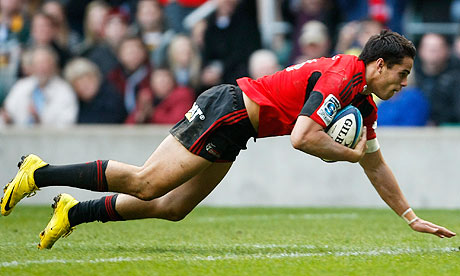
Just to stand with 5,000 Kiwis at the Westminster Cathedral remembrance service in London, although I saw no one there I knew personally, was quite special. To be at Twickenham last week with my family to see my home team the Canterbury Crusaders, playing here because their home stadium had been destroyed, was a profoundly moving experience. And watching the videos of the Christchurch memorial service, and reading the newspaper clippings sent from home, touched me in a way I had not anticipated nor expected.

I wrote about the memorial services some days ago, but I’ve linked and quoted below a few other tidbits about the Christchurch service and the game that fellow Kiwis (and others) might enjoy.

1. Paul Holmes in the New Zealand Herald

‘Never mind the heat, this was truly a special day’ – some quotes:

‘Prince William was very giving of himself. He spent oodles of time with the rescue workers, the service people and with the crowds. His speech was one of the star moments of the day. He hit exactly the right spot with us all. Make this man king right now. Let's move on. William praised New Zealanders as having again displayed the qualities for which we're universally known, "courage and understated determination". He quoted his grandmother, the Queen, as saying that grief is the price of love. It was pure class.’

‘Hayley Westenra (pictured) stopped the day. She stopped the birds in the trees, did Hayley. The sun stopped moving across the sky and listened in wonder. The timing in her performance of Amazing Grace was extraordinary. You found yourself not breathing.’ (Listen to it here)

‘It was a marvellous service. There were many moments that had you wiping tears. Tears for the loss. Tears for the courage. Tears for the future.’

2. The Crusaders vs Sharks Game at Twickenham

We turned up in our red and black face paint in the pattern of Darth Maul from Star Wars and ended up on Television New Zealand News. See all of us at 51-54 seconds and my interview at 1.11-1.14. Quite bizarre!

Watch the highlights of an amazing game of running rugby featuring 22 internationals on you tube and if you are British be very afraid!

The game featured again an emotional NZ anthem by Geoff Sewell along with Pokarekare Ana from Hayley. And the one minutes silence for the 182 earthquake victims with 35,000 people in the huge Twickenham stadium was quite phenomenal.

I have always been proud of my home team which has won the super rugby crown seven times in fifteen attempts. But I felt extra proud that day to be a Kiwi and a Cantabrian. And we have soaked up the praise from the British commentators again and again ever since.

Some selections below – but if you have time and are feeling indulgent (or are a Kiwi) then read the articles in full and enjoy:

‘Adversity brings out the best in some people. It will take more than a decent 80 minutes of rugby to rebuild the ruins of central Christchurch but a spectacular win for the Crusaders achieved some important goals in the London sunshine… Last but by no means least this was the day when several fond, smug northern hemisphere assumptions were systematically torn apart. Yes, the weather was glorious and conditions perfect for running rugby. Yes, there were 22 internationals on the field at kick-off. Yes, a few tackles went astray. But long before the Crusaders wing Sean Maitland scored the decisive ninth try of a pulsating match it was equally clear that those who reckon the Super 15 has nothing to teach its European counterparts inhabit the myopic land of cloudy cuckoos.’ (The Guardian)

‘They were in London as a direct consequence of the earthquake that wreaked such destruction on their home town of Christchurch, yet the mood of their rugby was anything but careworn, still less doom-laden. If Daniel Carter and Sonny Bill Williams were jaw-droppingly good in midfield, there were contributions from less celebrated individuals, such as the wing Sean Maitland and the flanker Matt Todd, that might have made every international coach sit up and take notice. How can a team lose a genuinely great loose forward like Richie McCaw to injury, and then conjure up someone as good as Todd out of thin air to take his place?’ (The Independent)

‘Not everyone can offload like Sonny Bill Williams or Dan Carter. But what the home unions and France do have is loads of athletic young men who, with a bit of encouragement, could play like the Whitelock brothers, Owen Franks, Matt Todd and Zac Guildford, all of whom displayed more wit and pace than many of their better-known northern brothers would have done in similar circumstances. All of them did the basics outstandingly well but there was more to it than that. It was not the froth – the nine tries and the aggregate of 72 points in a 44-28 win for the Crusaders – which made such an impression. Above all, it was the blissful confirmation that the best rugby teams are about brain as much as brawn. What price the mere gym monkey against someone like Sonny Bill: part streetwise octopus, part street juggler, part juggernaut?’ (Guardian Blog)

Saturday, 2 April 2011

Nan Maitland's assisted suicide demonstrates the incremental extension that will follow any change in the law

According to the Sunday Times, an 84 year old British woman committed suicide at a Swiss facility last month because she did not want to die of old age.

Nan Maitland (pictured), who suffered from arthritis but was active and not terminally ill, left a note saying she wished to escape the 'long period of decline, sometimes called "prolonged dwindling", that so many people unfortunately experience before they die'.

Maitland, who was separated with three children, was a joint founder of SOARS (Society for Old Age Rational Suicide), an organisation that campaigns to allow elderly people who are not terminally ill to receive assistance to end their lives.

She was accompanied on her trip by Liz Nichols of FATE (Friends at the End) and Michael Irwin, the leading founder of SOARS, who has already been linked to a number of overseas suicides and recently escaped prosecution for assisting in the death of Raymond Cutkelvin, who suffered from cancer of the pancreas.

On that occasion Irwin had literally begged the Director of Public Prosecutions (DPP) to put him away so that he could become a martyr for the pro-euthanasia movement.

He had even provided documentary evidence of his involvement in terms of a £1,500 payment towards paying for Cutkelvin's visit to the Dignitas Suicide facility in Zurich.

In fact, Irwin, previously chairman of the Voluntary Euthanasia Society (now euphemistically rebranded 'Dignity in Dying') has helped no less than nine people kill themselves, and had even been struck off by the General Medical Council in 2005 for a past attempt.

This latest case demonstrates the logical slippery slope that operates once it is accepted that assisted suicide is admissible on grounds of compassion or personal choice.

Despite the fact that campaign groups like Dignity in Dying claim that they want a more limited change in the law to allow assisted suicide only for people who are 'terminally ill' (whilst quietly interpreting that term very liberally indeed), the arguments they use (compassion and personal choice) are the same used by their former leader Irwin and others with more overtly extreme agendas.

Irwin, through this latest case, is clearly pushing the envelope to see more to see just how far he can go before he is stopped. But his actions demonstrate that we are seeing in operation here nothing other than a policy of incremental extension.

It will be interesting to hear what the Director of Public Prosecutions makes of the case.

We have seen now Swiss cases involving Britons with a wide range of conditions. It began with terminally ill people with cancer or motor neurone disease. It moved to those with progressive, but not necessarily fatal conditions like multiple sclerosis, and then to those with severe non-fatal conditions like spinal cord injury.

Now it seems that that elderly people with chronic non-fatal conditions as common as arthritis are wanting make use of it. The net is growng wider and wider.

These cases give a strong warning of why it would be so foolish to change the law in this country.

Any change in the law to allow assisted suicide for anyone at all would establish it as a 'treatment option' which others would then demand and which the health service would be obliged to fund.

This would inevitably lead to vulnerable people - those who are elderly, disabled, depressed or sick - feeling under pressure to end their lives so as not to pose a financial or emotional burden to others.

And at a time when health budgets are already under pressure and many families are feeling the pinch, that is a situation that we most definitely want to avoid.

But probably the most disturbing thing about this case is the fact that it could arise at all and what it tells us about our collective societal attitudes to old age. I heartily recommend reading Christina Odone's reflections on this.

Friday, 1 April 2011

Evidence shows Welsh move to make morning-after pill available free over the counter to teenagers will badly backfire

I recently blogged on the fact, surprising to some, that morning-after pills don’t actually cut teen pregnancy rates and instead increase the incidence of sexually transmitted infections.

This morning we learnt that so-called ‘emergency contraception’ can now be obtained without charge from pharmacies across Wales, while still costing about £25 in the rest of the UK.

Community pharmacists in Wales can also give the ‘morning-after pill’ to under-16s, if ‘clinically appropriate’.

Health minister Edwina Hart (pictured) announced the move last November, saying she wanted professional advice available without appointment and ‘easily accessible within the 72-hour time span necessary for emergency contraception to be most effective’.

The morning-after pill is already free to women across the UK if it is prescribed by a GP or family planning clinic, but Wales is the first nation to offer emergency contraception without charge on the high street.

Many people (including many in government) mistakenly think that morning-after pills being made more freely available will actually help Britain’s growing problem of unplanned pregnancy.

So why do I think it is such a bad idea?

First, it is strategy based on no evidence at all. In fact the very latest research in Britain, published in the Journal of Health Economics (full text) just last December and reported in the Daily Telegraph in January, showed that morning-after pills don’t cut teen pregnancy and actually increase the risk of sexually transmitted disease.

I blogged at the time that these findings were the latest nails in the coffin of the Labour government’s teenage pregnancy strategy, dreamt up by the now defunct Teenage Pregnancy Independent Advisory Group (TPIAG) which was set up in 2000 to advise the government on how to cut teenage pregnancy. Part of its (failed) strategy was ironically to make morning-after pills free over the counter to teenagers.

The new research, by professors Sourafel Girma and David Paton of Nottingham University, compared areas of England where the scheme was introduced with others that declined to provide the morning-after pill free from chemists.

The academics found that rates of pregnancy among girls under 16 remained the same (ie that the morning after pill did nothing to improve things), but that rates of sexually transmitted infections actually increased by 12%.

The phenomenon whereby applying a prevention measure results in an increase in the very thing it is trying to prevent is known as ‘risk compensation’.

The term has been applied to the fact that the wearing of seatbelts does not decrease the level of some forms of road traffic injuries since drivers, feeling more secure, are thereby encouraged to drive more recklessly. In the same way making morning-after pills widely available encourages more sexual risk-taking and more sexually transmitted disease as a result. Any effect on decreasing pregnancy rates is cancelled out by rising levels of promiscuity.

But in addition to the fact that this strategy will simply not work as a solution I have other problems with it.

Second, this policy removes prescription of the pill from the safety of the doctor patient relationship. The pharmacy, school or supermarket, is the wrong context for a young distressed girl to make such a request and to receive counselling and care.
Exchange of essential medical and social information needs time and sensitivity. Issues include side effects (nausea and/or vomiting in 25%), what to do if the girl vomits within three hours of taking the tablet, and the ‘failure’ rate of perhaps 15% of all potential pregnancies. A discussion of the social context is equally essential (eg. Recognizing coercion by an older man, other abusive sexual relationships, concomitant alcohol and drug use).

Third, these arrangements remove all accountability of the child to the parents and other health professionals in the discredited belief that this has a negative effect on teenage conception rates. The evidence suggests otherwise. Accountability to parents, it seems, is not only a disincentive to pharmacy attendance but also to sexual activity! There are many communities in Britain (both ethnic groups and faith communities) where rates of teenage sexual activity are very low indeed. The government needs to be studying these communities and learning from them.

Fourth, the MAP can potentially work as an abortifacient. The Levonelle-2 preparation used in this initiative is a progesterone-only MAP whose makers acknowledge sometimes works by preventing implantation of the early embryo. At very least teenagers have a right to be properly informed about the pill’s mode of action.

Finally, this government strategy is underpinned by the dangerous assumption that there is no right or wrong in teenage sexual activity - just choice. This assumption has led to a values-free framework in which the rate of unplanned pregnancies and sexually transmitted disease amongst teenagers is the highest in Europe.

The best way to counter the epidemic of unplanned pregnancy and sexually transmitted disease is to promote real behaviour change through such programmes as Love for Life (Northern Ireland), Love2last (Sheffield), Challenge Team, Romance Academy or Lovewise (Newcastle). These are just the sorts of initiative that the government should be encouraging.

This latest move is sadly yet another unfortunate, ill-thought out knee-jerk government response to Britain’s spiraling epidemic of unplanned pregnancy, abortion and sexually transmitted disease amongst teenagers and will only make matters worse.

The latest UK evidence, as outlined above, shows that making the morning-after pill available in this way will result in no fall in unplanned pregnancy and will increase levels of sexually transmitted disease.

Instead of pursuing these tired flawed ‘ambulance at the bottom of the cliff’ policies the government should be focusing on evidence-based strategies aimed at bringing about real behaviour change.

Thursday, 31 March 2011

Pro-choice critics of the Dorries/Field amendments on abortion counselling are misrepresenting the medical facts

There has been considerable media interest in the fact that two MPs (Nadine Dorries and Frank Field) have tabled abortion amendments to the Health and Social Care Bill (See Sunday Express, Daily Mail and Daily Telegraph).

These two MPs are attempting to ensure two things.

First they want women with unplanned pregnancies to have access to information and counselling that is not provided by the abortion industry. At present most women contemplating abortion go directly via abortion providers like Marie Stopes International (MSI) and BPAS. The MPs argue that these groups have a financial vested interest in providing abortion for which they receive over 60 million pounds of taxpayers’ money annually. This does not give women a fair deal.

Second they want the responsibility for producing abortion guidelines to be taken away from the Royal College of Obstetricians and Gynaecologists (RCOG) and given to the National Institute for Health and Clinical Excellence (NICE). They claim that the RCOG guidelines misrepresent the scientific evidence on the health consequences of abortion and that some RCOG members have financial and ideological vested interests in abortion provision.

Not surprisingly this move has generated a strong reaction from abortion providers and pro-choice commentators.

BPAS Ann Furedi, chief executive of BPAS, has said:

‘This amendment is a misguided attempt to solve a problem that does not exist. If abortion providers have a vested interest, it is to be as sure as possible that women are making the choice that is right for them. The RCOG is clearly the body best suited to produce guidance on what information is appropriate. We find it bizarre that anyone should think that this expert, clinical role should be removed from them.’

Ann Furedi (pictured) does not give any reasons to support her claim that the RCOG is the best body to provide guidance and fails to mention that this body’s abortion guidance has been widely criticised for misrepresenting research data.

This is precisely the problem that Dorries and Field are attempting to address. She also does not tell us that 11 of the 18 people on the RCOG panel producing the guidance benefit financially from abortion provision nor that both BPAS and MSI are represented on the panel. Nor does she mention that there are no psychiatrists on the panel despite the fact that it purports to speak authoritatively on the link between abortion and mental health.

The RCOG, which published the latest draft of its guidance in January without a proper consultation period, has now withdrawn it in order to await a report from the Royal College of Psychiatrists. I have previously already written to David Cameron with my concerns about the lack of transparency, bias and undue haste surrounding their consultation.

The comments of Telegraph 'Strategic Events Editor' Tom Chivers (pictured) are also a revealing example of the way that scientific evidence is cherry-picked by pro-choice commentators in order to justify their view that abortion has few if any consequences for women’s health.

In a blog titled ‘Abortion and the 'Right to Know' – or, why we should link to our sources’ Chivers criticizes Dorries and Field for not quoting primary sources to support their claim that women having abortions are 30% more likely to experience mental health problems.

He correctly identifies the primary source (after help via friends on Twitter) as an article by Fergusson et al originally published in the British Journal of Psychiatry in 2008 but then goes on, ironically, to make misleading statements about the scientific evidence.

Chivers claims that the Fergusson study is ‘now rather out of date’ and that ‘The BJPsych itself has revisited the topic, with a 2009 systematic review’. Both these statements are simply untrue.

If you follow the link in Chivers’ blog you will see that it does not refer to a BJPsych review at all, but rather to a letter written to the journal by two non-psychiatrists with close links to the pro-choice movement, Sam Rowlands and Kate Guthrie.

The Royal College of Psychiatrists has itself acknowledged in a 2008 statement that there are in fact studies which show a link between abortion and mental health problems and is currently carrying out a review of the literature that has not yet been published.

The review that Rowlands and Guthrie refer to is not from the editors of the BJPsych at all (or the Royal College) but is actually one by the American Psychological Association which has been widely criticised as I have previously outlined on this blog.

Why is all this so important? For two reasons.

First most abortions in Britain (about 98%) are carried out on mental health grounds when in fact there is no clear evidence in the literature to show that being denied abortion has mental health consequences. The jury is still out on this question as the RCPsych acknowledges. This makes the vast majority of abortions in Britain technically illegal.

Second, there is growing evidence that abortion actually poses a risk to mental health. The significance of Fergusson’s research is that it was a particularly robust 30 year longitudinal study which had carefully corrected for confounding variables. What makes it doubly interesting is that Fergusson himself comes from a pro-choice perspective so arguably had a vested interest in his research not showing any link between abortion and mental health problems.

Fergusson and his co-authors are simply asking that people be honest about the scientific facts. I will leave the final comments to them.

‘It is our collective view that the most important implications of our findings relate to the current legal justification for abortion in the UK, New Zealand and a number of other jurisdictions in which abortion is authorised principally on medical grounds. In all of these jurisdictions, the great majority of abortions are authorised on mental health grounds. Our findings strongly challenge the use of mental health criteria as a routine justification for abortion. Our results suggest that the mental health risks of having an abortion may be greater and are certainly no less than the risks of coming to term with an unwanted pregnancy. Further, as far as we can tell, there is no evidence that suggests that the mental health risks of abortion are less than those of continuing with an unwanted pregnancy. To establish this would require a series of replicated studies showing that the mental health outcomes of those having an abortion are better than those of an equivalent series of women coming to term with an unwanted pregnancy. No such evidence exists…What emerges most clearly from the accumulated body of evidence on abortion and mental health is: (a) the primary reasons that most women seek abortion are personal, social and economic rather than relating to mental health concerns; and (b) there is no body of evidence that would lead a reasonable person to conclude that the provision of abortion mitigates the mental health risks of abortion.’

Saturday, 19 March 2011

Memorial services for victims of the Christchurch earthquake and a prayer for New Zealand

On 2 March I was privileged to be one of about 5,000 Kiwis in London who attended the memorial service in Westminster Cathedral, London, for victims of the 22 February Christchurch earthquake. It was amazing to be part of this gathering. The church was full half an hour before the service so I joined over 1,000 people outside.

We sang ‘How great thou art’ led by a Maori concert group and listened to messages from John Key, NZ prime minister, and Richie McCaw, All Black captain, before Hayley Westenra sang the first verse of the national anthem in Maori and English (see video).

E Ihowā Atua,
O ngā iwi mātou rā
Āta whakarangona;
Me aroha noa
Kia hua ko te pai;
Kia tau tō atawhai;
Manaakitia mai
Aotearoa


God of nations! at Thy feet
In the bonds of love we meet,
Hear our voices, we entreat,
God defend our Free Land.
Guard Pacific's triple star,
From the shafts of strife and war,
Make her praises heard afar,
God defend New Zealand


It now seems that the final death toll of the disaster will be 182, making it New Zealand’s fourth greatest disaster after the Erebus crash (257), the Napier Earthquake (256) and the wreck of the Orpheus (189).

I was born in Christchurch, and still have friends, medical colleagues and second cousins living there – although thankfully all managed to escape injury.

This week, a service in Hagley Park, Christchurch, at which Prince William spoke was attended by tens of thousands and I have just learnt that there will be a further service at Westminster Abbey on Sunday 27 March.

On the same day, the Canterbury Crusaders (my home team!) will play the Natal Sharks at Twickenham, and, God willing, our family will be there. Over 60,000 (mainly Kiwis and South Africans) are expected at the match and £5 from each ticket is going to the Red Cross for earthquake relief. There will be a further act of remembrance preceding the game.

The Crusaders ground, the AMI stadium in Christchurch, has been so badly damaged that it is not able to host any of their home matches this tournament and will not even be available for the rugby world cup later this year.

The home of English rugby has therefore thankfully been made available for this clash of the titans between the Crusaders (seven times winners of the competition) and the Sharks, this year’s leaders (until last night!)

This will be the first ever super rugby series match to be played outside Australia, New Zealand or South Africa.

As we seek by God’s grace to make sense of this tragedy I am drawn back to the words of our own national anthem – which is itself a prayer.

Thomas Bracken wrote the words in the early 1870s, and offered a prize of 10 guineas for the best musical setting. This was won by Otago schoolteacher John Joseph Woods and the first ever performance was in 1876.

In 1940, on the recommendation of the NZ Centennial Council, the Government declared God Defend New Zealand to be the National Hymn, and bought the copyright. In 1977, with the Queen's consent, God Defend New Zealand was given equal status with God Save the Queen, as is now played preferentially.

Most New Zealanders know the first verse by heart and many can also sing it in Maori. But not many know the other verses.

There is a lovely version with all five verses, sung by Cindy Ruakere, available in both word and picture versions on you tube which has been posted to honour the earthquake victims along with another brief video to the words of ‘My City in Ruins’ which captures something of the Kiwi resilience in the wake of tragedy.

I have pasted the full version of the anthem here – because I think it beautifully expresses the prayers of New Zealand Christians for our country. New Zealand is a nation, greatly privileged, and with a glorious past, but we have sadly in many ways turned our back on the God who has blessed us so much.

In many ways we still benefit from God’s blessings. New Zealand is a country of extraordinary natural beauty which enjoys a high standard of living. It was recognized as the least corrupt nation on earth in 2009. and shared the honours with Denmark and Singapore in 2010.

But in many other ways we have fallen and need a fresh touch of God’s Spirit.

My prayer is that in the wake of this disaster God will move in such a way that our nation really does become a light to the nations and is truly worthy of its own anthem.

I hope you will enjoy reading and reflecting on these words, and can make them your own prayer for New Zealand.

God of nations! at Thy feet
In the bonds of love we meet,
Hear our voices, we entreat,
God defend our Free Land.
Guard Pacific's triple star,
From the shafts of strife and war,
Make her praises heard afar,
God defend New Zealand

Men of ev'ry creed and race
Gather here before Thy face,
Asking Thee to bless this place,
God defend our Free Land.
From dissension, envy, hate,
And corruption guard our State,
Make our country good and great,
God defend New Zealand.

Peace, not war, shall be our boast,
But, should foes assail our coast,
Make us then a mighty host,
God defend our Free Land.
Lord of battles in thy might,
Put our enemies to flight,
Let our cause be just and right,
God defend New Zealand.

Let our love for Thee increase,
May Thy blessings never cease,
Give us plenty, give us peace,
God defend our Free Land.
From dishonour and from shame
Guard our country's spotless name
Crown her with immortal fame,
God defend New Zealand.

May our mountains ever be
Freedom's ramparts on the sea,
Make us faithful unto Thee,
God defend our Free Land.
Guide her in the nations' van,
Preaching love and truth to man,
Working out Thy Glorious plan,
God defend New Zealand.